
| |
PROVINCIAL
WORKMAN'S ASSOCIATION
The precursor of the United Mine Workers' Union in Cape Breton
was the Provincial Workman's Association (PWA). With its beginnings
in Springhill in 1879, the union was an association that evolved
when the men united in an effort to regain an original wage
that had been doubly cut. The men walked out and refused to
go back to work until their wage was restored. Within a week,
it was restored and this successful walkout spurred them on
to form the Association. In 1881, the PWA was incorporated
into an act of the Nova Scotia Legislature.
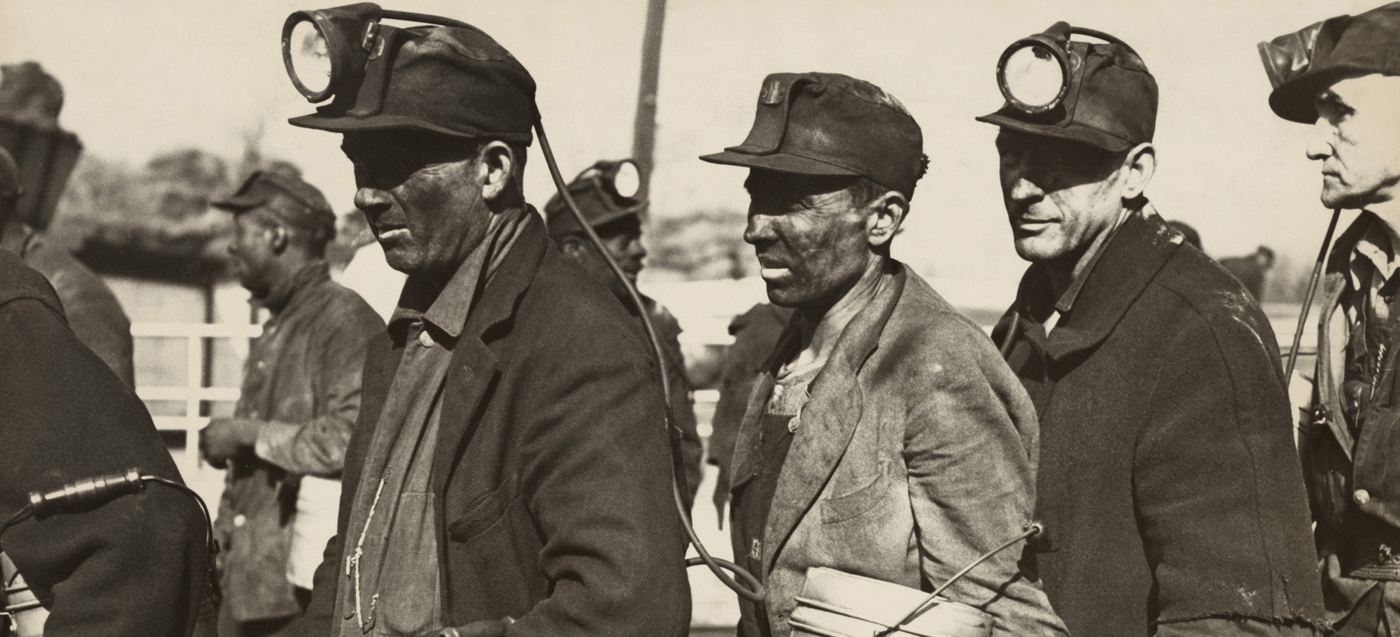
In 1881, Robert Drummond toured Cape Breton as an agent of
the PSW and it was obvious that the miners working there needed
an Association as wages were low, hours were long and Company
store prices high. In spite of a hostile attitude towards
unions, the miners were becoming more and more enthusiastic
and soon four lodges were organized, including Drummond Lodge
(Sydney Mines), Equity (Caledonia) and Island and Unity Lodges
(Bridgeport). By December 1881, over 50% of the Island's mines
had joined. Shortly after, the number of lodges increased
to eight. People were still afraid to disobey the Company,
and so it was often hard to find meeting places.
The essential points of the PWA were unity, equity and progress.
It wanted to make the mining population a respected segment
of the community. The PWA used three notable tactics to accomplish
its aims: strikes, lobbying and politics. Strikes were used
as a last resort when all else failed.
The first period of the PWA (1879-1898) was largely devoted
to a reform of the condition under which the miners lived.
The second period of the PWA (1898-1917) was devoted to increasing
the wages of the miners and improving their standard of living.
The PWA was amalgamated in 1917 with the United Mine Workers
of Nova Scotia to form the Amalgamated Mine Workers of Nova
Scotia.
During its term, the PWA made some outstanding contributions
to the coal fields of Nova Scotia besides being the first
union association to form in Cape Breton.
1.
The PWA secured legislation favourable to miners such as
the Arbitration Act of 1888 passed by the Liberal Government;
2. Strikes and lockouts were reduced;
3. The PWA won safety improvements in the Coal Mines Regulation
Act including the basic safety measures under which the
collieries of the Province operated.
The
strength of the Association wavered over the years. For instance,
in 1904, a strike at the Sydney Steel Plant was so weak that
the Company was able to take in replacement workers. In 1909
the arrival from the United States of the United Mine Workers
of America resulted in a number of Cape Breton Lodges being
dissolved and UMW District 26 being formed.
|
|